Archive › jonobacon.org Posts

Community Leadership Summit 2011

Reposted from jonobacon.org.


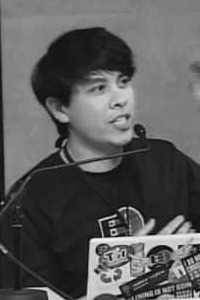
Thanks to Reid Beels for the photo.

A few weeks ago was the Community Leadership Summit 2011 in beautiful Portland, Oregon. For those who are unfamiliar with the event, I started the CLS three years ago to be the central meeting place for those who are passionate about community leadership and management to get together to share ideas, experiences, and get to know each other. Apologies for the delay in getting this online. Life has been more than a little hectic recently. All good though. :-)

I deliberately architected the CLS with a few core values. Firstly it is free and always will be; I believe that it is always important that everyone is welcome and that you don’t need dollars in your pocket to learn how to grow a community. Secondly, the event is strictly vendor-neutral. The goal of the CLS is to provide an environment in which everyone is welcome to share their experience and knowledge and thus everyone is an equal at the event (no-one gets elevated privileges because they work for a particular company). I want offer my thanks to our sponsors Google, Microsoft, Ohloh, OpenStack, Oracle, and of course our wonderful friends at O’Reilly. Each of these companies sponsored the CLS in the true spirit that the event was intended.

So how did it go?

I was really happy with CLS this year. We had a large number of attendees show up on the Saturday and while there are always fewer people on the Sunday, the Sunday was jam packed with interesting discussions and plenty of folks joining us.

The CLS is an unconference, which means that the attendees volunteer and run sessions. This gives the event a far more diverse range of content instead of the other organizers and myself deciding what the topics should be. Throughout the weekend I wandered around and popped into sessions and every session had thriving and vibrant discussions going on.

In addition to the diversity of content, I was really happy this year with the diversity of people attending too. We had people from a wide range of organizations joining us, and many people who had never been to an unconference before. I also noticed a very high proportion of people who work professionally as community managers. I am delighted to see our profession continuing to grow – one of the primary reasons I organize the CLS and wrote the The Art of Community is to continue to grow the profession of community management.

I was delighted to also see event continues to strike a positive gender balance; often these types of events are filled with men, but the CLS has traditionally had a high attendance of women, and more-so this year. I am not sure if this is indicative of community management or the CLS being a comfortable, empowering and safe environment for women, but I hope it is both. On this note, I also put together a anti-harassment policy (unceremoniously nabbed from the Ubuntu Developer Summit site) just before CLS11 kicked off.

Selfishly, I am delighted with how CLS11 turned out. I got to listen to everyone’s stories, learn new approaches to community management, and make a bunch of new friends. I really do think I met some of the nicest people in my life at CLS11. :-)

Fortunately it seems the other attendees came away with a similar experience. The event feedback sessions were full of positive experiences of the event and positive suggestions for the future. There is lots of discussion continuing on Twitter with the #cls11 hashtag.

For those who are curious, yes, CLS12 is going to happen next year in Portland again. I will get the website updated when I get more details of the dates.

Thanks to the other organizers, Van Riper, Dave Nielsen, Nate DiNiro, Marsee Henon, John Jons, Jeff Osier-Mixon and Erica Bacon for helping with the event and thanks for everyone who came along!

Comments ( 0 )

Interviewed on FLOSSWeekly

This post was originally posted at jonobacon.org. You can read it here

A few weeks back I had the pleasure of doing an interview on the rather excellent FLOSSWeekly podcast with Leo Laporte and Randal Schwartz. On it I talk Community, Ubuntu, Art Of Community, Canonical, Severed Fifth and more. Check it out here.

Comments ( 2 )

First Videocast Tomorrow

This post was originally posted at jonobacon.org. You can read it here

Quick note: tomorrow (Wed 15th April) at 11am Pacific I will be doing my first real live video cast here discussing various topics including Ubuntu, the Jaunty release, Art Of Community and the Community Leadership Summit.

I will also be fielding your community questions in the video cast: you can ask them in the chat channel that is on that page. Hope to see you there!

Comments ( 3 )

Community Leadership Summit 2009

This post was originally posted at jonobacon.org. You can read it here

Community Leadership Summit - 18th - 19th July 2009 - San Jose, California

Just a quick message to let you all know that today I announced the Community Leadership Summit 2009 on the 18th and 19th July 2009 in San Jose, California. The event takes place the weekend before OSCON in the same venue: the San Jose McEnery Convention Center.

The goal is simple: if those passionate about building great communities can get together to compare notes and discuss and debate these topics, we will all benefit from better communities.

The summit gathers together community managers, leaders and organizers as well as the projects, organizations, commercial vendors, ISVs and others who have an interest in building a strong and enabled community. The purpose of the event is to get everyone together to talk about the many nuances of building strong and effective community, such as governance, creating collaborative environments, conflict resolution, transparency, open infrastructure, social networking, commercial investment in community, engineering vs. marketing approaches to community leadership and more.

The event is very much a summit: it’s primary focus is around discussion. It will be run in the style of an unconference; a clear and open schedule in which attendees can volunteer sessions and engage with other attendees. This will ensure the summit packs in a healthy chunk of diversity, covering a wide range of topics and perspectives. In addition to the discussions the summit will feature some scheduled presentations, panel discussions and social events.

The event is entirely free, but you need to pre-register here. You can read more about the event at www.communityleadershipsummit.com.

In its first day day many community managers have signed up to attend such as Joe ‘Zonker’ Brockmeier (OpenSuSE Community Manager – Novell), Dave Neary (GNOME Foundation Board Member – Neary Consulting), Brian Proffitt (Community Manager – Linux Foundation), David “Lefty” Schlesinger (Linux Foundation Mobile Advisory Board, GNOME Foundation), Karsten Wade – (Fedora Community Leader – Red Hat) and John Mark Walker (Community Manager – Collab.net). Rock and roll. :-)

Comments ( 0 )

Painting The Community Manager

This post was originally posted at jonobacon.org. You can read it here

Recently the tubes have been ablaze with chatter of where the somewhat popular topic of community management should fit into an organisation. When the coin is flipped, said chatterers have been debating whether to place their bets on either Marketing and Engineering as an apt destination for the reporting line. Do we expect our community managers and representatives to report to the Director Of Marketing or the Chief Technical Officer? More specifically, when you bring a community manager into your organisation, which of these two teams do you feel can most effectively support and enable a community builder to actually build a great community?

In recent months the word community has become quite the buzzword in the Open Source business world. Its presence is felt more and more at conferences, in papers, on blogs and across the current global Twitter sensation. Irrespective of the medium, this explosion of interest in community has happened for three closely interlinked reasons.

  • Firstly, community is implicitly a positive word. It speaks of openness, participation, awareness, and an agreeable intention to engage in an environment driven by merit. For Open Source companies, this is powerful inferred meaning that speaks well to their audience. As such it makes entire sense for a company to light up their website like a Christmas tree with references to “community“.
  • Secondly, community has become synonymous with “engagement in the Open Source space”. Open Source companies are fully aware that if they don’t have an answer for their community relations strategy, they simply won’t be taken seriously by a significant demographic of people. Whereas five years ago this demographic of people was often seen as strange hygienically-challenged bespectacled nerds who lived in their mother’s basement adorned with Buffy The Vampire Slayer posters, it is now well known that those with buying capacity and/or influence are placing importance in the community attributes of Open Source . These are real customers who have developed this value expectation due to the constantly re-enforced Open Source mantra of participation, community and technical quality. When the industry cradles Open Source and its associated values, the big cats in the ecosystem need to adjust to reflect that.
  • Finally, irksome economic times have resulted in very real consequences for small businesses. Executives have been forced to re-assess how they can achieve their goals and ambitions with a more painful awareness of the bottom line. Multiple Marketing and Engineering people can be expensive, a lot more expensive than a Community Manager.

The amalgamation of these attributes has presented a strong commercial justification of community and those who can build it, and a set of expectations around what these community builders can deliver. And here folks, lies the problem.

In every industry certain words that once had reasonably obvious illustrative attributes and consequences have subsequently become colloquial references. We have seen this extensively with trademarks: Aspirin, the Hoover, Cellophane, Thermos and even Heroin were all once trademarked to specific companies (Bayer, Hoover Company, DuPoint, Thermos GmbH and Friedrich Bayer & Co respectively). Using Hoover as an example, in England many people will refer to any brand of vacuum cleaner as a “hoover”. At one point in time a “hoover” though would point to a very specific representation of focus, quality and expectation in a vacuum cleaner that was driven by the Hoover Company. Since then the trademark has been somewhat genericized in different parts of the world and what some refer to as a “hoover” will often bear no actual resemblance to the focus, quality and expectation of a product that would come from the Hoover Company.

Similar risks around mis-guided expectations are arguably facing community managers. We need to be careful that with all of the buzz, focus and excitement around community management that we don’t step over, hide or downplay the very real day to day focus of this work in favour of academically pleasing social science. If we unseat this balance, we face the risk of genericizing community management as “the theory of working with groups of similar interests” as opposed to connecting the term firmly with hands-on best practise in building real communities that do real measurable work.

Recently much of the rhetoric around community has been presented in a generic and somewhat ethereal way. Many people have stood on many stages and many blog entries have been written by even more people that speak to the theoretical, buzz-word entrenched social architecture of community, but unfortunately fall short of the details of how they actually build a community. Of course, this theory and social science is hugely important and I would never wish to demote it’s piece of the picture, but it does represent a piece as opposed to the picture as a whole. The rest of the picture (in the Open Source space) is filled with the nuts and bolts of collaboration.

The essence of great Open Source community is in great collaborative processes, infrastructure and opportunities that help drive a united team of contributors in a shared direction. When your community can get their hands on freely available and powerful tools, simple and non-bureaucratic processes, have a world of great opportunities to contribute to in different, diverse and exiting ways, and have their contributions recognised, a powerful and productive community flourishes.

Getting back to the puzzle that we set out to explore at the start of this post, community management is a tale with both Marketing and Engineering story lines flowing through it. If one is missing, community can feel unbalanced, misrepresented and ineffective. We should always seek to celebrate and market the opportunities and importance of community, but that means nothing if you are not willing to roll up your sleeves and build and re-enforce the collaborative groundwork in your community.

My recommendation for the Open Source businesses uncertain of how to move forward: ensure your community manager is well versed in the mechanics and technical/social foundations of collaboration in Open Source communities and ensure he or she is able to strategically structure and execute on objectives that enable your community on the ground to do great work. Ensure your community manager has a close connection to your technical leaders, but also have a close connection with your marketing department to help them articulate and express your community story.

Tiny Plug: Keep an eye out for my up and coming book on effective community management – the Art Of Community to be published by O’Reilly in Summer.

Comments ( 3 )